
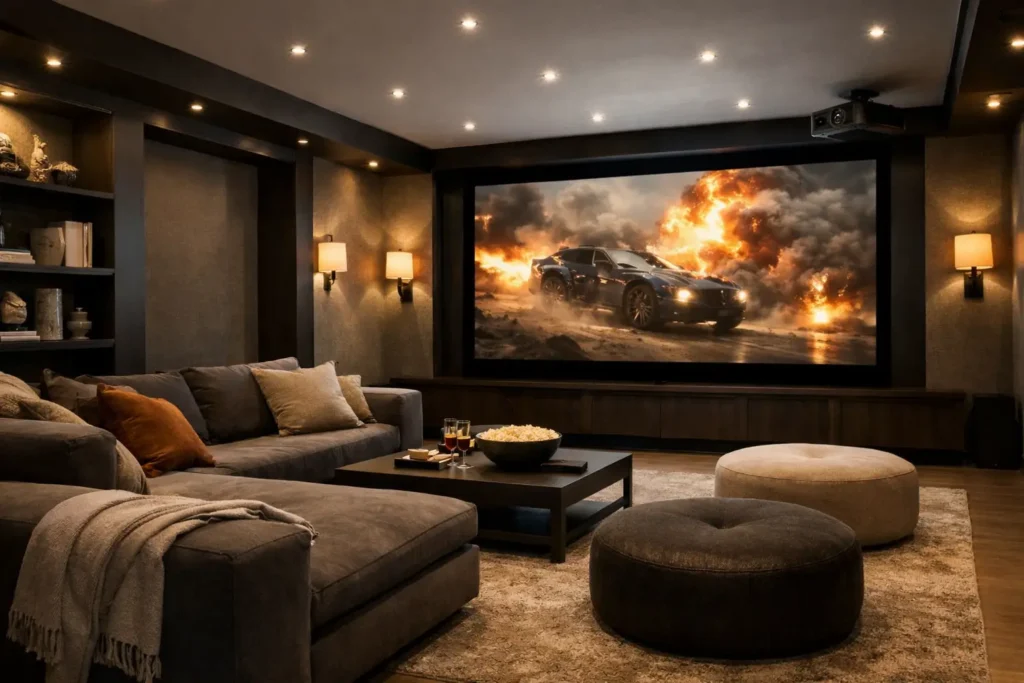
A home cinema usually looks impressive in photographs long before it proves itself on film night. The real test comes when the room is dark, the sound is working hard, and everyone is expecting a proper cinema experience rather than a large television with dimmed lights. The best home cinema room ideas are the ones that balance performance, comfort and simplicity, so the space feels effortless to use and consistently good to watch in.
That balance is where many projects succeed or fail. A beautiful room with poor acoustics will always disappoint. Equally, a technically capable system in a bright, echoing room will never deliver what the equipment is capable of. The strongest cinema rooms are designed as complete environments, with the screen, speakers, lighting, power, ventilation and control all considered together from the outset.
Best home cinema room ideas that actually improve the experience
The first decision is not the projector or the speaker brand. It is the room itself. A long, enclosed room is usually easier to work with than a large open-plan area because light and sound can be controlled properly. If you are planning a renovation or new build, this is the stage to think beyond floor finishes and wall colours. Cable routes, equipment locations, acoustic treatments and ventilation need to be built into the design rather than added later as compromises.
Room proportions matter more than many people expect. A square room can make bass uneven and difficult to manage, while a room with sensible width, length and ceiling height gives more flexibility with speaker placement and seating. This does not mean every cinema needs a dedicated basement or a purpose-built extension. Media rooms, loft conversions and spare rooms can all work well, but the design choices should reflect the space rather than fight it.
A common mistake is trying to push the screen to the largest possible size without considering viewing distance. Bigger is not automatically better if it forces the front row too close or dominates the room in a way that becomes tiring. The right screen size should feel immersive without making fast movement uncomfortable. In many homes, a well-chosen screen that suits the room will outperform an oversized one every time.
Get the lighting under control
If there is one feature that transforms a room quickly, it is lighting control. Cinema rooms need layers of light, not one ceiling fitting on a switch. You want enough illumination for entering the room, finding seating and cleaning, but you also need subtle low-level lighting that supports the atmosphere without washing out the picture.
Wall lights, recessed fittings, LED step lights and concealed strip lighting can all work well when they are dimmable and properly zoned. The goal is control. A single button should be able to set a pre-film scene, an interval scene and a cleaning scene. That sounds like a small detail until you have lived with a room where everyone is standing up to find switches after the credits.
Natural light needs the same attention. Blackout blinds or lined curtains are not just decorative additions. They are essential if the room will be used during the day or in summer evenings when ambient light lingers. In rooms with large glazing, motorised blinds tied into the wider control system make a practical difference and help the cinema feel integrated into the home rather than isolated from it.
Treat sound as part of the room, not just the kit
Great cinema sound is rarely about buying the largest speakers available. It is about allowing the speakers to perform properly. Hard surfaces cause reflections, dialogue becomes less clear, and bass can turn boomy or uneven. Acoustic treatment often sounds technical and intimidating, but in practice it is one of the most valuable investments in the room.
This does not have to mean covering every wall in visible foam panels. Acoustic fabrics, slatted timber finishes, carpet, padded wall sections and carefully designed ceiling treatments can all improve performance while maintaining a refined interior. The best results usually come from combining absorbent and diffusive surfaces so the room sounds controlled without becoming acoustically dead.
Speaker placement is equally important. A surround system should create a convincing sound field around the audience, not simply make noise from various corners. That requires proper positioning, sensible cable planning and calibration once installation is complete. It is one of the clearest examples of why cinema rooms benefit from specialist design rather than piecemeal upgrades.
Design ideas for a home cinema room that feels comfortable
A home cinema should still feel like part of the property. Some clients want a dramatic dedicated room with dark finishes, star ceilings and tiered seating. Others want a more understated media room that works for family television, sports and gaming as well as films. Neither approach is better in absolute terms. It depends on how the room will be used week to week.
Dark finishes generally help image quality because they reduce reflections around the screen, but that does not mean every surface must be black. Deep blues, charcoal greys, muted greens and rich timber tones can all work beautifully. Texture matters as much as colour. Softer finishes tend to make the space feel warmer and perform better acoustically.
Seating deserves more thought than it often gets. Recliners are popular for good reason, but the room layout must leave enough circulation space and ensure everyone has a comfortable sightline. In smaller rooms, a well-designed sofa arrangement may be more practical than bulky cinema chairs. In larger spaces, two rows can work well if the rear row is raised appropriately. The point is not to copy commercial cinemas. It is to create a room that suits your household.
Storage and equipment placement also affect the overall experience. If AV equipment is left visible in the room, fan noise and indicator lights can become distracting. Housing source devices and amplifiers in a separate rack, utility area or ventilated cabinet often improves both appearance and performance. It also makes maintenance, upgrades and fault finding far easier over time.
Make control genuinely simple
One of the best home cinema room ideas is also one of the least glamorous: make the system easy to use. A premium room quickly loses its appeal if starting a film means juggling five remotes, switching inputs manually and troubleshooting audio settings. Simple control is not a luxury extra. It is fundamental to how often the room gets used.
A well-programmed control system can bring together the projector or display, audio, lighting, blinds and source devices into one clear interface. That might be a wall-mounted keypad, a dedicated remote or a touch panel that mirrors wider smart home control. What matters is consistency. Press one button and the room should prepare itself correctly every time.
This becomes even more useful in larger properties where the cinema is part of a broader technology ecosystem. Lighting scenes, heating, security and multi-room audio can all be integrated sensibly, giving the room a natural place within the home rather than making it feel like a separate technical island.
Do not overlook ventilation and power
Cinema rooms generate heat. Projectors, amplifiers, people and enclosed spaces are not a comfortable combination unless ventilation has been planned properly. Too many otherwise attractive rooms become stuffy after an hour, which affects both enjoyment and equipment reliability.
Quiet ventilation or comfort cooling can make a substantial difference, particularly in dedicated rooms with little natural airflow. The key word is quiet. Any mechanical system in a cinema environment must be selected and installed with noise control in mind. There is no point creating excellent acoustics if the room hums throughout quiet scenes.
Power provision is another detail that deserves early planning. Dedicated circuits, clean cable management and sensible allowance for future upgrades make the installation safer, neater and more reliable. This is especially relevant in high-specification homes where the cinema may sit alongside networking, lighting control, security and distributed AV systems. When these services are coordinated from the beginning, the result is far cleaner and more dependable.
When bespoke design is worth it
Off-the-shelf cinema packages can be tempting, but they rarely account for the realities of the room, the building fabric or the way the household wants to use the space. Bespoke design starts with the room and the client brief, then builds a solution around both. That approach typically delivers better performance and avoids spending in the wrong places.
For developers and architects, this is particularly important. Cinema rooms often sit within larger projects where joinery, lighting design, HVAC, electrical works and networking all intersect. Coordinating those disciplines early prevents clashes and produces a much more polished result. For homeowners, it provides confidence that the room will function properly on day one and remain serviceable long after the installation team has left.
An experienced integration specialist can also help separate worthwhile investment from unnecessary specification. Not every room needs the same projector, the same speaker layout or the same level of automation. Good advice is often about restraint as much as ambition.
The best cinema rooms are not defined by one statement feature. They work because every element has been thought through – picture, sound, comfort, lighting, control and infrastructure. If you get those fundamentals right, the room stops feeling like a collection of products and starts feeling like part of the home. That is when film night becomes easy, immersive and worth repeating.


