
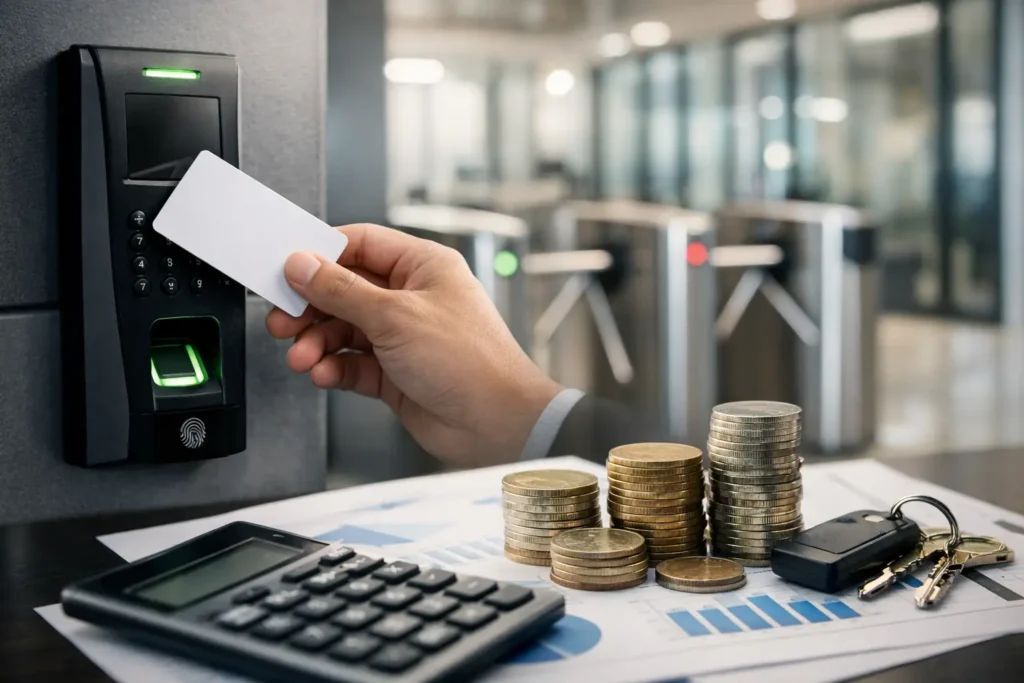
A basic access control door can cost a few hundred pounds. A fully managed, multi-door system with fobs, intercoms, remote management and fire integration can run into many thousands. That wide range is exactly why people ask what does access control cost – because the honest answer is that it depends on what the system needs to do, how many doors you want to secure, and how much control you want over users, reporting and future expansion.
If you are budgeting for a home, office, block entrance, school or commercial unit, the useful question is not just the headline price. It is what you are actually paying for, what level of security you need, and whether the system will still suit the building in three or five years.
What does access control cost for a typical installation?
In the UK, a simple standalone access control setup for one door might start at roughly £700 to £1,500 installed. That often covers a reader or keypad, electric lock release, power supply and basic programming. It suits smaller sites where one entrance needs controlled access without advanced reporting or central management.
A more capable networked system for one or two doors will usually sit higher, often around £1,500 to £4,000 depending on hardware quality, door type, cabling routes and whether you want fobs, cards, PIN entry, app control or an intercom. This is where many residential developments and small businesses start, because it gives more flexibility to add users, audit access and scale later.
For larger commercial premises, shared residential buildings or multi-door sites, costs rise more noticeably. A system covering several doors with central software, multiple user groups, timed access schedules, remote administration and integration with CCTV or alarms can easily reach £5,000 to £20,000 and beyond. The system itself is only part of the cost. Installation complexity, electrical work and ongoing support often shape the final figure just as much as the hardware.
The biggest factors that affect access control cost
The number of doors matters, but it is not the whole story. One difficult door can cost more than two straightforward ones. Timber, aluminium and glass doors all present different installation requirements, and some existing entrances need extra work before access control can be fitted reliably.
Door type and locking method
A standard internal office door is usually cheaper to adapt than an external metal gate or a glazed aluminium entrance. Magnetic locks, electric strikes, shear locks and motorised locks all have different price points and installation demands. If the door has to fail safe, meet fire door requirements or tie into an existing escape route strategy, specification becomes more critical.
This is one of the areas where cheap quotes can be misleading. If the locking arrangement is not suitable for the door set, the system may work poorly, look untidy or create compliance issues.
Standalone or networked system
Standalone systems are cheaper because each door works independently. They can be fine for a single entrance in a low-complexity setting. The trade-off is management. If a user leaves, changing credentials across multiple doors can become time-consuming, and reporting is limited.
Networked systems cost more upfront, but they are usually the better long-term option when you need flexibility. They allow central user management, scheduled access, event logs and easier expansion. For commercial clients and larger homes with staff access, deliveries or gated entry, that extra control is often worth it.
Credentials and entry method
A keypad-only system is generally less expensive than one using proximity fobs, smart cards, mobile credentials or biometric readers. Biometrics in particular can raise costs quickly, not just for hardware but for setup, privacy considerations and user management.
Most projects land somewhere in the middle. Fobs and cards remain popular because they are familiar, dependable and easy to issue. Mobile-based entry is increasingly attractive where convenience matters, but it depends on the building, the users and how much resilience you want if phones are lost, flat or replaced.
Cabling and site conditions
Retrofitting into a finished property or occupied workplace often costs more than installing during a build or refurbishment. Running cables through completed walls and ceilings takes time and care. Outbuildings, gates and remote entrances can also add trenching, containment, power supplies or network infrastructure.
This is where a site survey makes a real difference. Two buildings can need the same system on paper and end up with very different installation costs once routes, finishes and existing services are assessed.
Software, remote management and integration
If you want access control to operate as part of a wider security or building management setup, costs increase. Integration with CCTV, alarms, intercoms, gates, lifts or home automation platforms can be highly worthwhile, but it adds design and commissioning time.
For many clients, this is not an unnecessary extra. It is what turns separate technologies into a practical, manageable system. A business may want to verify door events against camera footage. A homeowner may want gate entry, video intercom and lighting scenes to work together from one interface. Those outcomes need planning, not just products.
Residential vs commercial access control costs
For residential properties, access control is often focused on front gates, side entrances, flat entry, plant rooms or home offices. Costs tend to be driven by aesthetics, convenience and integration. Clients often want discreet hardware, video verification and control from a phone or touch panel. In higher-end homes, access control may form part of a broader smart home environment, which changes both the design approach and the budget.
Commercial projects usually place more emphasis on audit trails, staff access levels, compliance, visitor management and durability. A small office may only need one or two controlled doors, but a warehouse, school or mixed-use development will usually need more structure. That means more readers, more permissions, more testing and often a stronger requirement for maintenance support.
Neither is automatically more expensive. A single premium residential gate with intercom, automation and bespoke integration may cost more than a modest office entrance. Equally, a straightforward home setup may be far less than a multi-door commercial installation.
Ongoing costs people often miss
When people ask what does access control cost, they often mean installation. In practice, there can be ongoing costs as well, and these should be part of the budget from the start.
Some systems carry software licences or cloud subscription fees. Others need periodic maintenance visits, battery replacement for backup power, call-out cover or remote support. If your system includes intercoms, gate automation or managed credentials, service requirements can be broader.
That does not mean ongoing cost is a disadvantage. In many settings, especially commercial ones, support is part of the value. A maintained system is more dependable, easier to update and less likely to fail at the wrong moment.
How to budget sensibly for access control
Start with the risk and the user journey, not the gadget list. Ask who needs access, when they need it, how you want to manage permissions, and what should happen if someone loses a credential or leaves the building. Then look at how the doors are built, whether cabling routes exist, and whether the system may need to grow.
It is also worth deciding early whether you want access control as a standalone measure or as part of a wider package with CCTV, alarms, networking or smart automation. An integrated design can cost more at first, but it often avoids duplicated labour and delivers a cleaner result.
For clients in Berkshire and surrounding areas, local site conditions, building age and the quality of existing electrical infrastructure can all influence price. An experienced installer will usually spot these issues before they become expensive surprises.
Cheap systems vs properly specified systems
There is always a low-cost option on the market. Sometimes that is perfectly adequate. If you only need to secure one internal door with basic PIN access, you may not need an elaborate platform.
But cheap systems can become expensive when they are hard to manage, unreliable in daily use or difficult to expand. Replacing poor hardware, correcting untidy installation work and reconfiguring a system that was never designed for the site often costs more than getting the specification right in the first place.
That is why proper design matters. A dependable access control system should suit the building, support the way people actually move through it, and leave room for change. For integrated technology specialists such as I-Vizion, that wider view is often what separates a quick install from a long-term solution.
If you are comparing quotes, look beyond the door price. Check what hardware is included, how user management works, whether software is licensed, what happens during power failure, and what support is available after handover. The right system is not simply the cheapest one. It is the one that gives you confidence every time a door unlocks, and every time it should not.


