
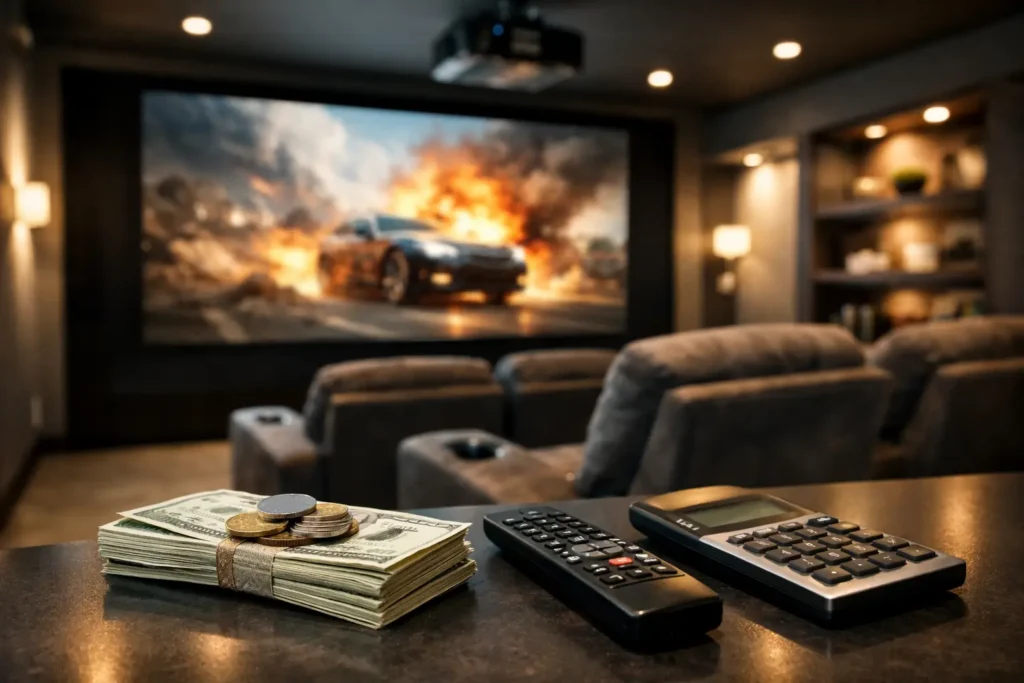
Ask three installers how much does home cinema cost, and you may hear three very different answers. That is not because the pricing is vague. It is because a home cinema can mean anything from a well-planned media room with a large TV and surround sound, to a fully dedicated, acoustically treated cinema with concealed equipment, automated lighting and one-touch control.
For most homeowners, the right question is not simply what it costs, but what level of performance, finish and convenience they want to achieve. A good system should suit the room, the way the household watches films, and the wider property. If it is designed properly from the start, it feels effortless to use and delivers a far better result than buying equipment piece by piece.
How much does home cinema cost in the UK?
In broad terms, a home cinema in the UK can start at around £5,000 to £10,000 for a straightforward setup and rise to £20,000 to £50,000 for a more refined dedicated room. At the premium end, bespoke cinema spaces can exceed £75,000 once specialist seating, acoustic treatment, custom joinery, lighting control and high-performance audio-visual equipment are included.
That is a wide range, but it reflects genuine differences in scope. A family converting a snug into a film room will have a very different budget from a homeowner fitting out a new-build basement cinema. The cost is driven not just by the screen and speakers, but by the room itself, the level of integration, and the quality of the installation.
What drives the cost of a home cinema?
The biggest cost factor is whether the room is multi-purpose or dedicated. A lounge-based system usually works around existing furniture, finishes and sightlines. That keeps building work lower, but it can limit speaker placement and acoustic performance. A dedicated cinema room gives much more control over lighting, sound isolation and layout, though naturally the build cost is higher.
Display choice is another major factor. A large premium television can be the right solution in brighter spaces and often offers strong value once installation is factored in. A projector and screen can create a more cinematic scale, but it needs the right viewing distance, proper light control and careful specification. The cheaper projector is not always the better value if the room cannot support it properly.
Audio is where many systems are won or lost. Clients often focus first on screen size, yet sound has a huge impact on immersion. A modest picture with excellent audio generally feels more convincing than an enormous screen with thin, underpowered sound. Entry-level surround packages cost less upfront, but a properly designed speaker layout with suitable amplification, subwoofers and calibration delivers a very different experience.
Installation complexity also matters. Hiding cables, housing equipment in a rack, building stud walls, improving power supply arrangements, integrating control systems and commissioning everything correctly all add to the investment. They also tend to be the elements that separate a polished cinema room from one that feels improvised.
Typical home cinema budget bands
A budget of £5,000 to £10,000 usually suits a simpler media room or lounge upgrade. This might include a large TV or an entry-level projector, a basic surround sound system, source equipment and standard installation. It can work very well when expectations are realistic, but there may be compromises in room acoustics, cable concealment, automation and future expandability.
At £10,000 to £20,000, the system usually becomes more coherent. This budget can allow for better speakers and amplification, improved display performance, cleaner installation, some acoustic treatment and more considered lighting control. For many households, this is where home cinema starts to feel properly engineered rather than assembled.
Between £20,000 and £50,000, you are typically in dedicated-room territory. This level can include a high-quality projector and screen, immersive surround formats, multiple subwoofers, acoustic design, bespoke cabinetry, cinema seating and integrated control of AV, lighting and shading. The difference here is not only sound and picture quality, but also usability and finish.
Above £50,000, the focus often shifts to full customisation. That may include star ceilings, fabric wall systems, sound isolation, hidden speakers, luxury seating, ventilation considerations and joinery built specifically around the room. These projects are less about buying individual products and more about creating a complete environment.
The hidden costs people often miss
When clients first sketch out a budget, they often price the visible items and overlook the infrastructure. In practice, some of the most important spending sits behind the scenes.
Electrical works are one example. Additional sockets, dedicated circuits, lighting changes and equipment power management may all be required. Network provision is another. Streaming, control systems and some AV components perform far more reliably on a properly planned wired network than on patchy Wi-Fi.
Acoustic treatment is also commonly underestimated. Good room acoustics do not have to mean an obvious studio look, but hard surfaces, poor speaker placement and untreated reflections can undermine even expensive equipment. Spending sensibly on acoustic performance often delivers more benefit than stretching for the next model up in projector or amplifier.
There is also the cost of control. A universal remote may be sufficient in a simple room, but once you have a projector, screen, AVR, streamers, lighting and blinds all working together, an integrated control system becomes far more valuable. That convenience is part of what makes a home cinema feel effortless for the whole household, not just the person who understands the kit.
Should you use a TV or projector?
This decision has a direct effect on cost and on the room design. A TV is usually brighter, simpler to live with and well suited to spaces used for everyday viewing. It can also be more cost-effective when the room has ambient light and no practical way to darken it properly.
A projector tends to make more sense in a dedicated cinema room where scale is a priority and light can be controlled. However, projector systems involve more than the projector itself. You must consider the screen, throw distance, mounting position, ventilation, maintenance access and room brightness. That is why two systems with a similar headline display cost can end up with very different total installation costs.
Is a DIY approach cheaper?
It can be, but only to a point. If the goal is a basic entertainment room and you are comfortable with cables, setup menus and speaker positioning, a self-installed system can reduce labour costs. The trade-off is that room layout, calibration and integration are often where performance is lost.
For higher-value properties, or for projects involving renovation or new build works, professional design usually avoids expensive mistakes. Incorrect projector placement, inadequate ventilation, poor wiring routes and underpowered audio are all common problems. Rectifying them later can cost more than getting the design right at first fix.
This is particularly relevant when home cinema forms part of a wider smart home or electrical project. When one specialist can coordinate AV, lighting, networking and control, the result is cleaner and more dependable. That joined-up approach is often where long-term value sits.
How to budget sensibly for a home cinema
A sensible budget starts with the room and the outcome, not with a shopping list. If the room is small, bright and used daily by the family, a large TV and well-designed speaker system may be the best investment. If the aim is a true film room for evening viewing, projector-based design, acoustic treatment and integrated lighting control become more important.
It also helps to decide what matters most. Some clients prioritise image size. Others care more about discreet aesthetics, one-touch control or powerful, room-filling sound. There is no single right answer, but there is always a best allocation of budget for the way the space will be used.
For homeowners, developers and design teams planning projects in Berkshire and surrounding areas, early coordination usually saves money. Allowing for speaker positions, wiring routes, joinery details and control requirements during the build phase is far more efficient than retrofitting them once the room is decorated.
So, how much should you expect to spend?
If you want a practical figure, many well-executed home cinema projects land somewhere between £10,000 and £30,000. That is often the range where performance, finish and ease of use come together in a meaningful way. Below that, good results are possible, but compromises become more obvious. Above that, you are usually paying for a more bespoke room, higher specification equipment and a stronger emphasis on immersion and design detail.
The right investment is the one that delivers a room you will actually use. A home cinema should not feel like a collection of expensive boxes. It should feel comfortable, intuitive and built around the property properly. When the design, installation and commissioning are handled with care, the value is not only in what you watch, but in how effortlessly the whole room works every time you press play.


