
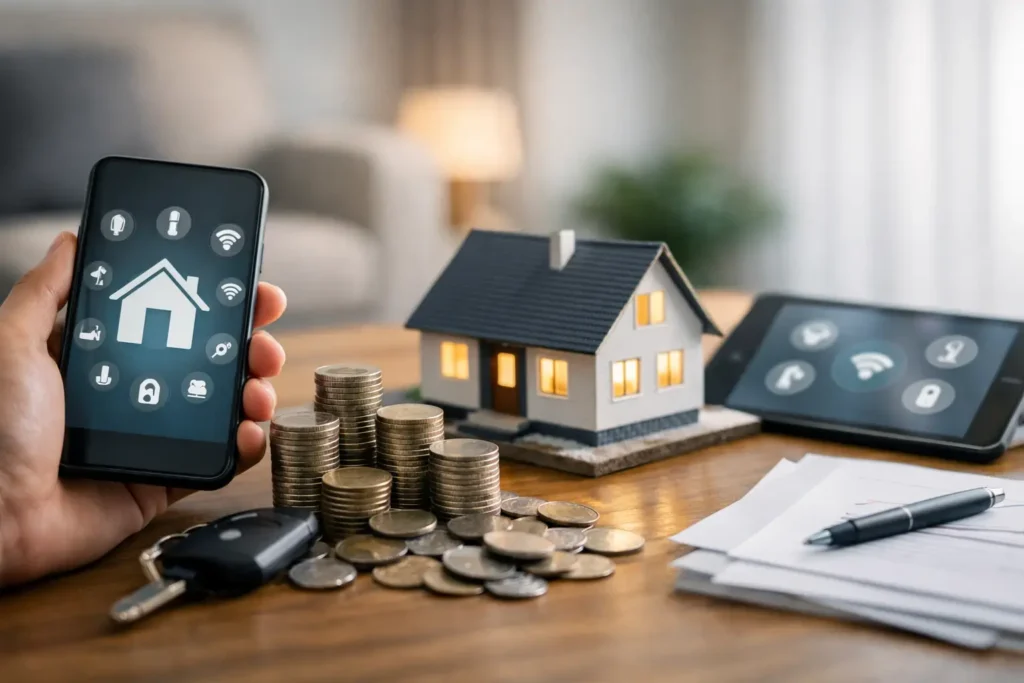
Ask three installers how much does home automation cost, and you may hear three very different figures. That is not because anyone is being evasive. It is because a smart home can mean anything from a few connected lights and a video doorbell to a fully integrated property where lighting, heating, blinds, audio, CCTV and access control all work together through one system.
For homeowners, developers and renovation clients, the real question is not just cost. It is what level of control, reliability and integration you want, and whether the system is being designed as a long-term part of the property or added as a collection of separate gadgets. Those choices have a direct impact on budget.
How much does home automation cost in the UK?
At the entry level, a basic smart home setup might cost from around £1,000 to £5,000. That usually covers a handful of app-controlled devices such as smart lighting, heating, doorbells, speakers or plugs, often using consumer products installed without a wider control strategy.
A more considered mid-range system for a family home often starts between £10,000 and £30,000. At this level, clients are typically looking for proper lighting control, integrated heating, multi-room audio, security, stronger Wi-Fi and a single control interface rather than several disconnected apps.
For a high-end or whole-home automation system, costs often begin at £30,000 and can run well beyond £100,000 depending on property size, specification and finish. These projects usually include centralised control, dedicated rack equipment, bespoke programming, hidden wiring, cinema or media rooms, electric blinds, access control and ongoing support.
That is a wide range, but it reflects the reality of the market. A one-bedroom flat and a six-bedroom new-build with gates, outbuildings and a home cinema should not cost the same to automate.
What drives home automation costs?
The biggest cost factor is scope. Automating one room is very different from automating an entire house. Lighting in a kitchen-diner may require a few circuits and keypads. Lighting across a full property can involve dozens of circuits, scene programming, dimming modules and coordination with the electrical installation.
The second factor is the level of integration. Standalone smart devices are cheaper upfront, but they can create a fragmented user experience. A fully integrated system costs more because it brings multiple technologies into one stable platform. That usually means more design time, more commissioning and more engineering behind the scenes.
Property type also matters. Retrofitting a finished home is often more labour-intensive than installing automation during a renovation or new build. If walls and ceilings are already complete, cable routes are more restricted and installation time can increase.
Then there is hardware quality. Consumer-grade devices can be fine for isolated tasks, but premium systems are built for long-term performance, cleaner installation and more reliable control. They also tend to offer better support for larger properties and more complex requirements.
Typical costs by system type
Lighting control is often one of the first areas clients automate properly. A small setup in one or two rooms may start around £2,000 to £5,000. Whole-house lighting control can rise to £10,000, £20,000 or more depending on the number of circuits, keypad locations, dimming requirements and whether decorative fittings need specialist control.
Heating and climate control can be relatively modest if you are simply adding smart thermostats. That may fall within £1,000 to £3,000. If you want heating tied into wider automation, zoned properly and coordinated with occupancy, schedules and remote access, costs will be higher.
Security is another common starting point. A smart alarm, video doorbell and a few CCTV cameras might cost £2,000 to £6,000 installed, depending on equipment quality and recording requirements. A more advanced system with perimeter protection, multiple cameras, remote access, gates or access control can increase significantly.
Multi-room audio often begins around £3,000 to £8,000 for a few zones with in-ceiling speakers and simple control. Larger properties with more zones, higher-end audio, AV racks and integrated control can move well beyond that. Home cinema rooms are particularly variable. A modest media room may start at £10,000, while a dedicated cinema with acoustic treatment, specialist seating and high-performance projection can multiply that figure.
Motorised blinds and curtains are usually priced per window and by fabric or treatment type. In a larger home, these can become a meaningful part of the budget very quickly, especially when integrated into lighting scenes and daylight control.
Why cheap smart home setups and bespoke systems cost differently
This is where many quotes become hard to compare. One proposal may cover devices only. Another may include design, wiring plans, electrical coordination, equipment supply, installation, programming, testing, client training and aftercare. The second will cost more, but it is also delivering much more.
Off-the-shelf smart products can appear attractive because the entry cost is low. For a small flat or a very simple requirement, that can be perfectly sensible. The trade-off is that these systems often rely heavily on Wi-Fi, cloud services and separate apps. Over time, clients may find they have built a patchwork rather than a coherent system.
A bespoke automation system is priced around performance and longevity. It is designed around the building, the way the occupants live and the technical demands of the project. That means fewer compromises, better reliability and a cleaner user experience, but it requires more planning and more specialist input.
Installation, design and support are part of the cost
One of the most overlooked parts of home automation pricing is the professional service behind it. Good integration does not happen by accident. It starts with understanding how the home will be used, where control points should sit, how lighting scenes should feel and how the network will support everything.
Installation is only one stage. Programming, commissioning and testing are equally important. So is handover. A well-designed system should feel simple to use, but getting to that point involves a lot of work in the background.
Long-term support matters too. Technology needs updates, occasional changes and sometimes fault-finding. Clients investing in a serious smart home system are usually not just buying equipment. They are choosing a specialist who can maintain and adapt that system over time.
How to budget realistically for a smart home
If you are building or renovating, the best time to plan automation is early. Trying to add it late in the project nearly always limits options or increases cost. Early design coordination allows cabling, power, containment and equipment locations to be planned properly.
It also helps to decide what must be integrated now and what can be future-proofed for later. For example, you may install the wiring and infrastructure for whole-house audio or blinds during the build, then phase the hardware in at a later stage. That approach can protect your long-term options without forcing every element into the first budget.
As a very rough guide, some homeowners allocate around 3 to 8 per cent of build or renovation cost to smart technology and AV, while more ambitious projects can exceed that. The right figure depends on priorities. If lighting ambience, security and entertainment are central to the brief, the allocation should reflect that.
When does home automation represent good value?
Home automation is good value when it solves real problems and improves daily use of the property. That might mean reducing wall clutter with elegant lighting control, making the house more secure when empty, simplifying media and music for the family, or ensuring guests and staff can use systems without confusion.
It is less about novelty and more about consistency. A house that responds properly to daily routines, shuts down at night, alerts you to security issues and gives clear control over lighting, heating and AV can feel materially better to live in. For developers and premium residential projects, integrated technology can also strengthen the overall specification and buyer appeal.
For clients in Berkshire and the surrounding area working on larger homes or high-specification refurbishments, that value often comes from engaging one experienced integration partner rather than juggling separate trades for electrical, AV, networking and security. That joined-up approach tends to reduce friction and improve outcomes.
There is no universal answer to how much home automation costs because there is no universal smart home. A sensible budget starts with the property, the lifestyle and the level of performance you expect. The clearer those priorities are, the easier it becomes to invest in a system that feels worthwhile not just on day one, but every day after.


